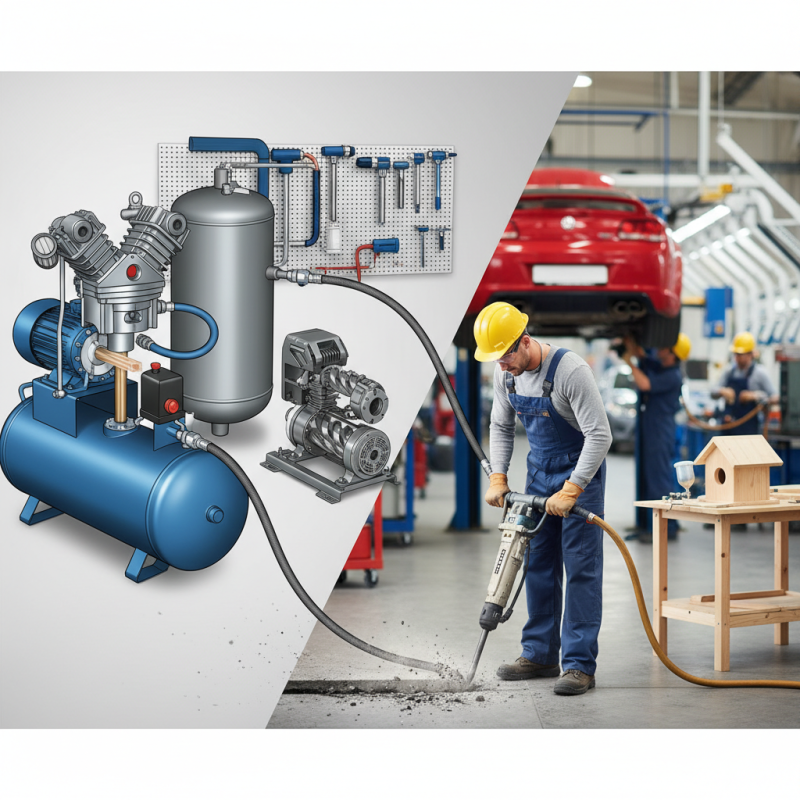
What is an Air Compressor and How Does It Work?
An Air Compressor is a powerful device used in various industries and applications. It transforms air into a pressurized form, making it useful for tools and equipment. This machine plays a vital role in construction sites, automotive repairs, and even home projects.
Understanding how an air compressor works is important for users. The process typically involves drawing in ambient air, compressing it, and storing it in a tank. Different types of air compressors, such as piston and rotary screw types, serve diverse needs. By grasping these concepts, users can maximize efficiency and safety.
However, not all air compressors are created equal. Each type has its advantages and limitations. Choosing the right one requires careful consideration of specific requirements and tasks. Reflecting on these aspects ensures a more effective application of air compressors.
Definition of an Air Compressor and Its Primary Functions
An air compressor is essential in various industries. It converts power into potential energy stored as pressurized air. This pressurized air has numerous applications, mainly in powering tools, inflating tires, and assisting in HVAC systems. According to the Compressed Air & Gas Institute, approximately 70% of industrial facilities use air compressors in their operations.
Air compressors come in various types, including reciprocating and rotary screw models. Each serves distinct functions. For instance, reciprocating compressors are often used for small tasks, while rotary screws handle larger volumes of air more efficiently. Report data from the U.S. Department of Energy indicates that compressed air systems can account for up to 30% of a plant’s total energy costs. Therefore, ensuring efficiency in these systems is crucial for operational savings.
However, misconceptions about air compressor maintenance can lead to significant issues. Neglecting regular inspections can result in energy waste and equipment failure. In fact, a National Institute for Occupational Safety and Health report highlights that improper maintenance can decrease a compressor's efficiency by up to 50%. Understanding the basics of an air compressor and its valuable functions can significantly enhance productivity and reduce operational costs.
Types of Air Compressors and Their Specific Applications
Air compressors come in various types, each suited for specific applications. The most common types include reciprocating, rotary screw, and centrifugal compressors. Each type serves different industries and tasks. For instance, reciprocating compressors are ideal for small workshops and home use. They are efficient for tasks requiring high pressure. On the other hand, rotary screw compressors are often used in manufacturing, as they provide a continuous airflow. Centrifugal compressors, known for their high capacity, are commonly seen in large industrial settings.
When selecting an air compressor, consider its application. For inflating tires, a small portable model works best. Larger projects may require a more powerful unit. Ensure your choice matches the tools you plan to use. Do not overlook maintenance. Regular checks can prolong the life of your compressor and improve performance.
Tips: Regularly check for air leaks. Leaks can reduce efficiency dramatically. Keep the compressor clean to avoid performance issues. Proper maintenance is crucial for reliable operation.
Types of Air Compressors and Their Applications
This chart illustrates the percentage of applications for various types of air compressors, highlighting the most common types used in different industries.
Components of an Air Compressor and Their Roles in Operation
An air compressor is a crucial machine that converts power into potential energy stored as pressurized air. Understanding its components is essential for effective operation. The main parts include the motor, pump, tank, regulator, and air filter. Each component plays a vital role in delivering compressed air efficiently.
The motor acts as the powerhouse, driving the compressor. It converts electrical energy into mechanical energy. The pump then compresses the air, raising its pressure. Tanks store this compressed air until needed, ensuring a steady supply. Meanwhile, regulators control air pressure and flow to prevent damage. The air filter removes impurities, protecting the inner workings and ensuring clean air output.
While these components work together seamlessly, issues can arise. A faulty motor may reduce efficiency. An improperly maintained air filter can allow contaminants to enter. Regular inspections and maintenance are crucial to avoid these pitfalls. Understanding these parts enhances reliability and extends the compressor's lifespan.
What is an Air Compressor and How Does It Work? - Components of an Air Compressor and Their Roles in Operation
| Component | Function | Importance |
| Intake Valve | Allows air to enter the compressor. | Essential for providing a continuous air supply. |
| Compressor Mechanism | Compresses the air using pistons or screws. | Main component for increasing air pressure. |
| Discharge Valve | Releases compressed air into the storage tank. | Critical for directing compressed air where it's needed. |
| Storage Tank | Stores compressed air for later use. | Helps maintain pressure and provides a reserve of air. |
| Pressure Switch | Controls the operation of the compressor based on pressure levels. | Ensures safe operation and efficiency. |
| Air Filter | Removes impurities from the air intake. | Protects internal components and improves air quality. |
Understanding the Working Principle of Air Compressors
Air compressors play a crucial role in various industries. The working principle revolves around converting power into kinetic energy. This process compresses air, increasing its pressure. According to the Air Compressor Market Analysis Report, the global air compressor market was valued at $30.2 billion in 2021 and is expected to grow. This growth highlights the significance of understanding how these machines operate.
When an air compressor runs, it typically uses either a piston or a rotary mechanism to draw in air. This air gets trapped and then compressed into a smaller volume. The energy used comes from an electric motor or a gas engine. Interestingly, many users overlook the importance of regular maintenance. Neglect can lead to decreased efficiency and premature failures. Studies indicate that poor maintenance can reduce compressor lifespan by up to 50%.
Another critical aspect lies in the air quality produced. Contaminants can enter the compressed air stream, affecting downstream equipment. According to the Compressed Air and Gas Institute, improper filtration can lead to significant operational costs. Hence, users must assess their specific air quality needs when operating compressors. The intricate balance between efficiency and quality requires continuous reflection and adjustment.
Common Uses of Air Compressors in Various Industries
Air compressors are vital tools across various industries, enabling a range of applications. In manufacturing, they power pneumatic tools like nail guns and drills. They assist in spray painting and provide the pressure needed for clean air blasting. These devices can enhance efficiency, but choosing the right compressor is crucial for optimal performance.
In the automotive sector, air compressors are indispensable. They inflate tires, run impact wrenches, and help with painting vehicles. Proper maintenance of these compressors ensures long-term reliability. Although air compressors are powerful, they can fail if not maintained. Regular checks and servicing are a must.
Tips: Always check the air filter regularly. A clogged filter can lead to decreased performance. Consider the noise level of your compressor if it's for an indoor workspace. This detail can significantly impact work conditions. Choosing the right size is also essential; an oversized compressor can waste energy.