How to Choose the Right Frequency Converter for Your Needs?
Choosing the right Frequency Converter is crucial for optimizing equipment performance across various industries. According to a recent report by Allied Market Research, the global frequency converter market is expected to reach $7.14 billion by 2027, growing at a CAGR of 5.8%. This growth reflects the increasing demand for efficient power solutions in sectors like manufacturing and renewable energy. Selecting the appropriate frequency converter can significantly enhance energy efficiency and operational reliability.
Different applications require different specifications. A converter designed for industrial automation may not be suitable for marine applications. Each type has unique features that cater to specific needs. The efficiency of a chosen converter can influence overall energy consumption. If not evaluated properly, one risks underperformance or costly operational errors.
Additionally, market trends show a rise in compact and lightweight converters, driven by advancements in technology. However, the diversity in features often leads to confusion. Experts stress the importance of careful selection to match the frequency converter's capabilities with actual use cases. Understanding these dynamics not only helps in making informed decisions but also ensures long-term reliability and efficiency.
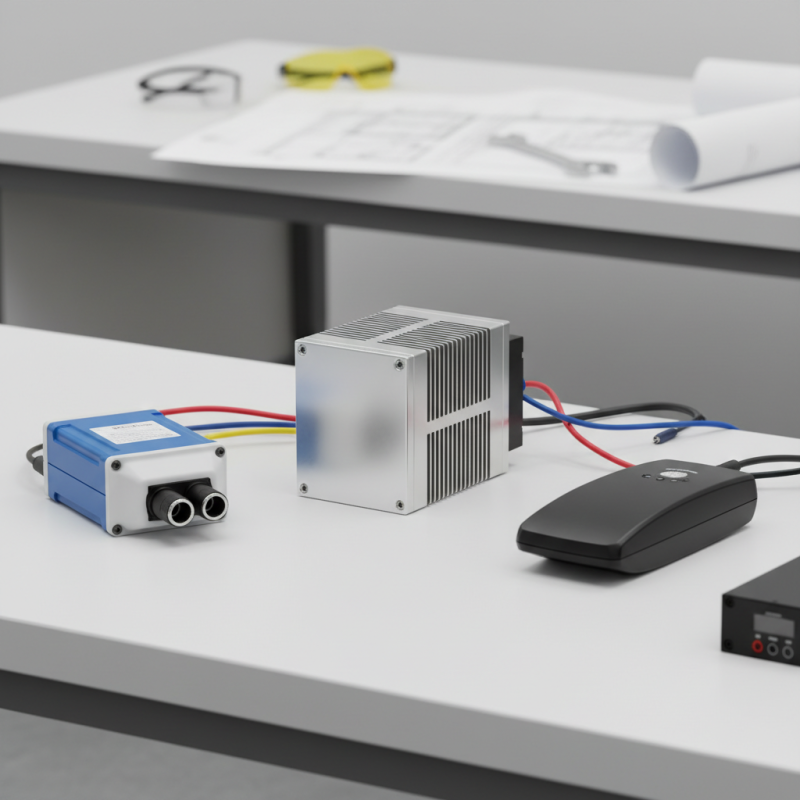
Understanding Frequency Converters and Their Applications
Frequency converters are essential devices in various industries. They adjust the frequency and voltage of electrical energy, enabling efficient operation of equipment. These devices can be found in manufacturing, HVAC systems, and renewable energy applications. Understanding how they work is crucial for selecting the right one for your needs.
Different types of frequency converters exist. Some are designed for specific applications, while others offer versatility. For instance, some converters excel in motor control. Others are better suited for powering wind turbines. It's important to evaluate your equipment's requirements. Consider factors like load type and energy efficiency. Sometimes, selecting the wrong converter can lead to performance issues or increased costs.
Choosing the right frequency converter also involves analyzing input and output specifications. Mismatched components can cause overheating or inefficient operation. Moreover, installation requirements vary. This can complicate the decision-making process. Reflecting on your unique needs will guide you toward the best choice. Balancing cost and performance is not always straightforward, but it's essential for achieving long-term benefits.
Identifying Your Power Requirements and Specifications
When selecting a frequency converter, understanding your power requirements is crucial. Start by determining the voltage specifications needed for your system. This includes knowing the input voltage and output voltage that matches your application. A mismatch can lead to inefficiency or equipment failure.
Consider the total power consumption of your devices. Calculate the required kilowatts and ensure the converter can handle this demand. It's important to account for both running and peak loads. Oversizing or undersizing the converter can lead to additional costs and operational issues.
Tips: Always check the specifications in the manual of your equipment. Consult with professionals if uncertainties arise. Keep in mind the environment where the converter will operate, as temperature and humidity can impact performance. Testing and validating in real conditions can expose unforeseen challenges.
Comparing Different Types of Frequency Converters
When selecting a frequency converter, understanding the different types available is crucial. There are two primary categories: voltage source converters (VSC) and current source converters (CSC). Each type serves distinct purposes and operates on different principles. VSCs are versatile and used broadly in applications like renewable energy integration. CSCs are often employed in industries requiring high power levels.
Performance varies significantly based on the converter type. VSCs can handle fluctuating loads and provide better efficiency at low speeds. In contrast, CSCs are great for applications where high reliability is paramount. However, VSCs might struggle with performance under extreme conditions.
Considering your specific needs is essential. Assess factors like power rating, load requirements, and application context. Seek guidance from experts if uncertain. Testing different models could provide insights into their suitability. The challenges of matching a converter's capabilities with application demands can lead to reflection and adjustment in your approach.
Evaluating Efficiency and Performance Metrics
When selecting a frequency converter, efficiency and performance metrics are critical aspects to consider. Data from the International Electrotechnical Commission reveals that effective converters can enhance energy savings by approximately 20-30%. This level of efficiency can significantly reduce operational costs in industrial settings and contribute to sustainability goals.
It’s important to evaluate metrics such as input/output voltage, current ratings, and total harmonic distortion (THD). Lower THD levels are essential for ensuring quality power delivery. According to a report from the IEEE, converters with less than 5% THD can improve system reliability and performance. However, achieving these metrics may require a more thorough assessment of individual application needs.
Consider the load type and operational environment. Not all converters perform the same under varying conditions. Specific applications may expose converters to higher temperatures or electromagnetic interference. Understanding these factors will help in selecting a converter that does not just meet specifications but also adapts to real-world demands. Regular performance assessments can also highlight areas for improvement, ensuring optimal functioning over time.
How to Choose the Right Frequency Converter for Your Needs? - Evaluating Efficiency and Performance Metrics
| Parameter | Description | Typical Values |
| Input Voltage | The voltage level required for operation. | Single-phase (230V), Three-phase (400V) |
| Output Voltage | The voltage level outputted to the load. | Customizable (110V to 690V) |
| Rated Power | The maximum power output in kW. | 0.5 kW to 1000 kW |
| Efficiency | The ratio of useful power output to the total power input. | <90% to 99% |
| Control Type | The method of controlling output frequency and voltage. | V/f Control, Vector Control, Servo Control |
| Protection Features | Safety mechanisms to protect the unit. | Overload, Overvoltage, Overcurrent, Short Circuit |
| Operating Temperature | The temperature range for safe operation. | -10°C to 50°C |
Budgeting for Your Frequency Converter Investment
When investing in a frequency converter, budgeting is crucial. Start by assessing your specific needs. Understand the application requirements, the type of equipment you plan to use, and the operational environment. Each detail affects the converter’s specifications and, ultimately, its cost. Sometimes, people underestimate the budget needed, focusing only on the initial price. A low-cost option can lead to higher expenses down the line due to inefficiencies or repairs.
Consider additional costs that come with installation and maintenance. Choosing a converter that fits well with current systems is essential for long-term savings. You might think you can save by picking the cheapest model, but in reality, the right investment pays off. Ensure you allocate budget for any potential upgrades in the future.
Failing to plan can result in overspending or buying unsuitable equipment. Reflect on your long-term goals. This approach not only helps in making a well-informed decision but also provides a more straightforward path when issues arise. Balancing quality and cost is key. Your budget should be flexible enough to accommodate any unexpected expenses.