How to Pursue a Career in Auto Mechanical Engineering?
Pursuing a career in auto mechanical engineering is an exciting journey. This field blends technology and creativity, attracting many passionate individuals. Auto mechanical engineering focuses on designing, testing, and manufacturing vehicles.
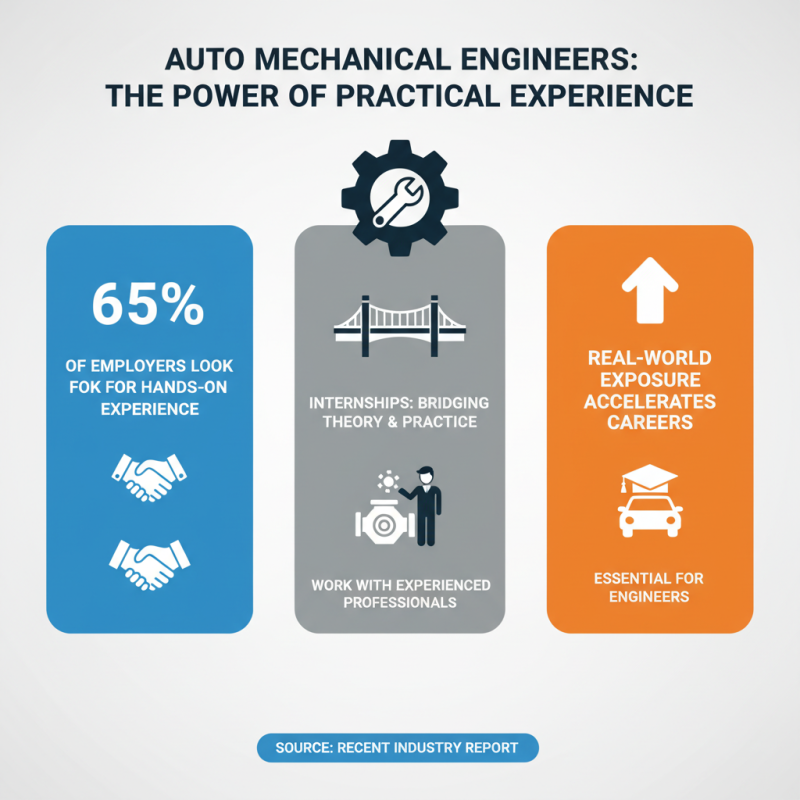
Aspiring engineers often face challenges. The pathway can seem overwhelming with complex subjects like thermodynamics and fluid mechanics. Gaining hands-on experience through internships is crucial. Many students find it difficult to balance theory and practice. Overcoming these hurdles shapes a competent engineer.
Networking is vital in this industry. Attending conferences and workshops opens doors to mentorship opportunities. Building relationships can lead to job placements. Understanding the importance of continuous learning is essential. The automotive industry evolves rapidly. Staying updated with new technologies is a must in auto mechanical engineering.
Understanding the Role of Auto Mechanical Engineers in Today's Industry
Auto mechanical engineers play a vital role in the evolving automotive industry. They design, test, and maintain vehicle systems. According to the Bureau of Labor Statistics, employment in this field is projected to grow 6% from 2021 to 2031. This growth is driven by the increasing focus on fuel efficiency and emission reductions.
The advancement of electric and autonomous vehicles is reshaping the industry landscape. Auto mechanical engineers must adapt to new technologies and skills. Data shows that around 50% of automotive engineers now spend time on software technology. This shift demands continuous learning and upskilling.
Tips: Embrace hands-on experience through internships. Collaborate with classmates on engineering projects. This involvement enhances your practical skills and enriches your resume. Stay updated on industry trends by attending workshops and reading relevant journals. Reflect on both successes and failures, as they are essential for growth in this dynamic profession.
Essential Educational Pathways for a Career in Auto Mechanical Engineering
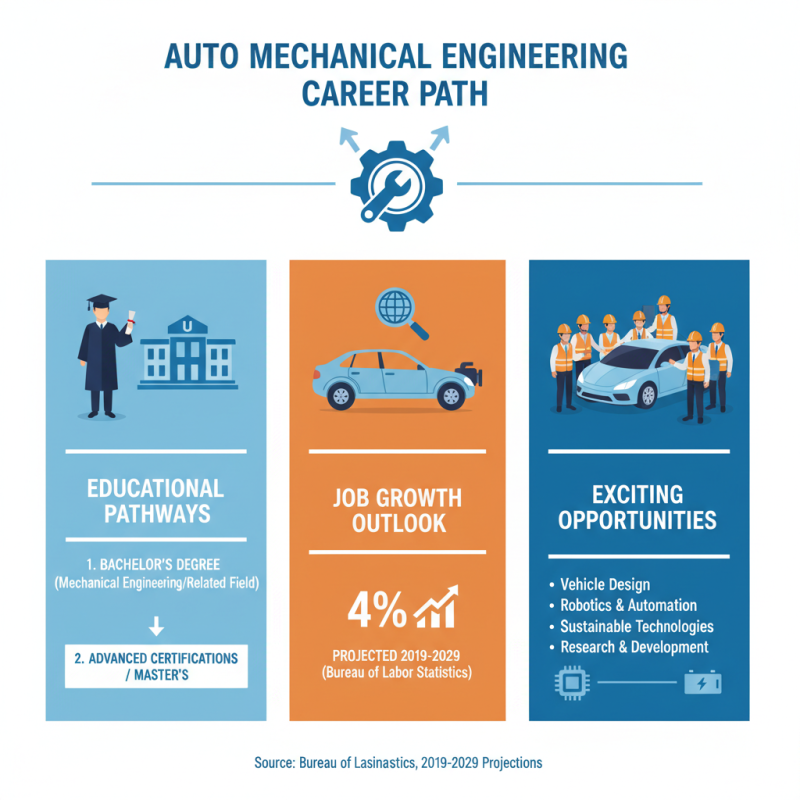
A career in auto mechanical engineering offers exciting opportunities. To succeed in this field, one must follow essential educational pathways. Most professionals start with a bachelor's degree in mechanical engineering or a closely related field. According to the Bureau of Labor Statistics, job growth in mechanical engineering is projected at 4% from 2019 to 2029. This growth highlights the demand for skilled engineers.
Many universities offer specialized programs in automotive engineering. These programs provide hands-on experience with automotive systems. Coursework often includes engine design, thermodynamics, and vehicle dynamics. Participation in internships is crucial. It provides exposure to real-world challenges. However, students often find it overwhelming to balance coursework with internship demands.
In addition to formal education, staying updated with industry trends is vital. Continuous learning through workshops and certifications can enhance skills. Reports indicate that engineers who engage in lifelong learning can expect higher salaries. Yet, it’s easy for professionals to get complacent. Reflecting regularly on one’s skills and growth areas is critical. Constant self-assessment prevents stagnation and drives career advancement.
Key Skills Required for Success in Auto Mechanical Engineering
Pursuing a career in auto mechanical engineering requires a solid foundation of key skills. Technical proficiency is crucial. You need to understand mechanics, thermodynamics, and fluid dynamics. These subjects will help you analyze vehicle systems effectively.
Problem-solving skills are also essential. Engineers often face unexpected challenges. Creativity can lead to innovative solutions. You might struggle initially but learning from these mistakes is important. Communication skills are vital. You'll work with teams and need to convey complex ideas clearly.
Attention to detail makes a difference. Small errors can lead to significant problems in design and safety. Being meticulous can save you time and resources. Continuous learning is necessary as technology evolves. Attend workshops and engage with industry updates. This keeps your skills relevant and sharp. Embrace the learning journey, including the setbacks. They lead to growth and expertise.
Key Skills Required for Success in Auto Mechanical Engineering
Exploring Career Opportunities and Growth in Auto Mechanical Engineering
A career in auto mechanical engineering opens doors to various opportunities. Engineers in this field work on vehicle design, development, and maintenance. They solve complex problems and improve vehicle performance. A hands-on approach is often necessary. This can involve getting your hands dirty, quite literally. It’s tough and sometimes frustrating. Car components are intricate, and issues can be hard to diagnose.
Job growth in auto mechanical engineering is promising. Electric and autonomous vehicles are on the rise. This shift requires engineers to adapt and learn new technologies. It can be overwhelming. Some engineers may struggle with this rapid change. Continuous learning is essential. Attending workshops and seeking mentorship helps.
Collaboration is crucial in this industry. Engineers often work with diverse teams. Communicating ideas clearly can be challenging. Misunderstandings may arise, which can lead to mistakes. Learning from these experiences is vital for personal and career growth. Balancing technical skills with teamwork improves project outcomes.